I’m a person, aren’t I? But how long have I been this person?
John Donne, when looking for excuses (‘today’) for breaking a love promise (made ‘yesterday’) included in his list the argument, “now/We are not just those persons which we were.”
More seriously, Proust’s great discovery, a discovery which could be considered the ‘moral’ of his huge multi-volume novel A la Recherche du Temps Perdu, is that, over time, we are many different kinds of person. And the most interesting work of English philosophy of the late twentieth century, Derek Parfit’s Reasons and Persons, argues the same point. (Parfit actually refers to Proust.)
It won’t wash legally, of course. For every legal commitment we have made, we remain the same legal person, however much we may in fact have changed. Does this extend further than the law?
Well, the things we have done in our lives remain things done by us, and the experiences we have had remain our experiences. (To the extent that we can recall them and are are not afflicted by dementia.) This may seem deeper.
What can help us now is another thought-tool. To the concept of a ‘person’, we can add the concept of a ‘self.’ I am the same someone who remembers my mother coming into my room at night, when I was just five, to say that she was going to the hospital to give birth (to my brother, as it happens: my earliest clear memory)—at least to the extent that I am still myself (my ‘self’).
Of course I can’t “see myself” in a mirror (although that is the expression we use). I can only see the person I am at the moment.
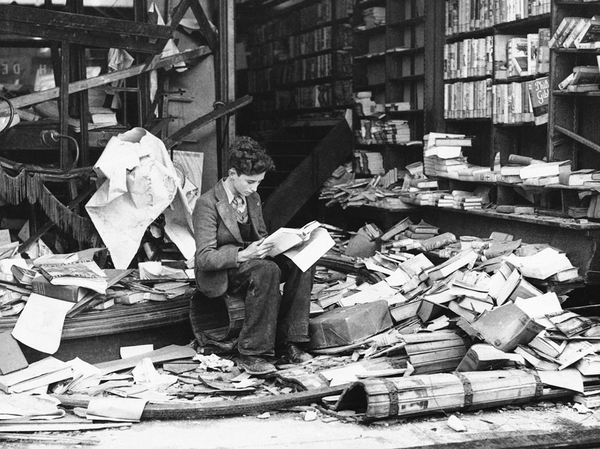
What about the person I can see in the accompanying photograph? It is obviously me, my self. I knew it the moment I first saw it. Historically, this photo was taken in October 1940, and I wasn’t born until September 1943. It’s still me.
Of course, I’m being whimsically mystical. Still, we have something to go on. Some of us change more than others, but yes, we really are different people at different times in our life. And yes, we really are always ourselves. We just need the two concepts to make the paradox possible.