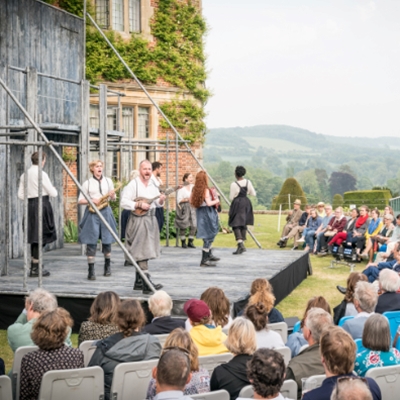
“Text and performance” is a recognised field of study. This identifies two subsidiary fields of study—literature and the theatre. However, there is a third field, which is often conflated with theatrical performance, but should be studied in its own right: drama.
For literary study, the classic motto is “the words on the page” (F R Leavis, among others). For theatrical analysis the motto could be, “an idea … can be said with an object or a gesture on the lighted stage.” (Tennessee Williams). For a motto for dramatic analysis we have to go back to Aristotle: “character in action”. The key single words are (i) “words”; (ii) “stage”; (iii) “action.”
A literary analysis of a play will focus on meanings and feelings, as they are embodied in a text. A theatrical analysis will focus on effects, as they may come across on a stage. A dramatic analysis would focus on what is being done, in (some) stage directions, and—much more importantly—in the words which characters use. A key insight here can be found in the philosopher J L Austin’s How to Do Things with Words.
I say “would focus” because real dramatic analysis is quite rare. When a character in a play says something, a literary critic might ask, “What does he/she mean?” An actor might ask, “How can I get this across?” A dramatic analyst would simply ask, “In saying this, what is the character doing?”
Drama depends on things being done: offers made, or threats or promises; insults, questions, requests, instructions, vows, forecasts, encouragements, discouragements, refusals … Stanislavsky recommends that actors think about what their characters’ intentions are, what they are up to. But the simpler question “what action am I taking, in saying this?” may often be just as useful. As Caesar, in Julius Caesar, I may be considering the line, “Let me have about me men that are fat.” I can think about what I am saying, and why I might be saying it, how I can convey my fear of Cassius, and so on. But it may help me (and equally, the director) if I look at the form of words and appreciate that I am issuing an order—a wishful order (like “Nessun dorma!” in Turandot), and not one I expect to be obeyed immediately, but an appeal for a particular state of affairs. I might say the line as though I expected to be obeyed. My performance (and the performance as a whole) will not suffer.
Of course, a dramatic analysis of a play will simply identify actions, one by one, for their own sake. I only give this example a theatrical context to show that a dramatic analysis may be functional (in terms of performance) as well as illuminating in its own right.
A sustained dramatic analysis will take as its subject matter sequences of actions. X asks a question, Y asks another question in return. X requests something of Y, Y does nothing. X issues a threat, Y makes a counter-threat. And so on.
What is more, the actions of entire plays can be identified—as King Lear, for example can be identified as a series of conjectures and refutations (to borrow an analysis of another kind altogether, by Karl Popper).